At 70% Off Gallery Prices, A Birmingham Workshop Ships Its Final Brass Orbital Sculptures Direct
After five decades at the lathe, a master horologist-machinist is releasing his final hand-built pieces to American collectors before he closes the bench for good.
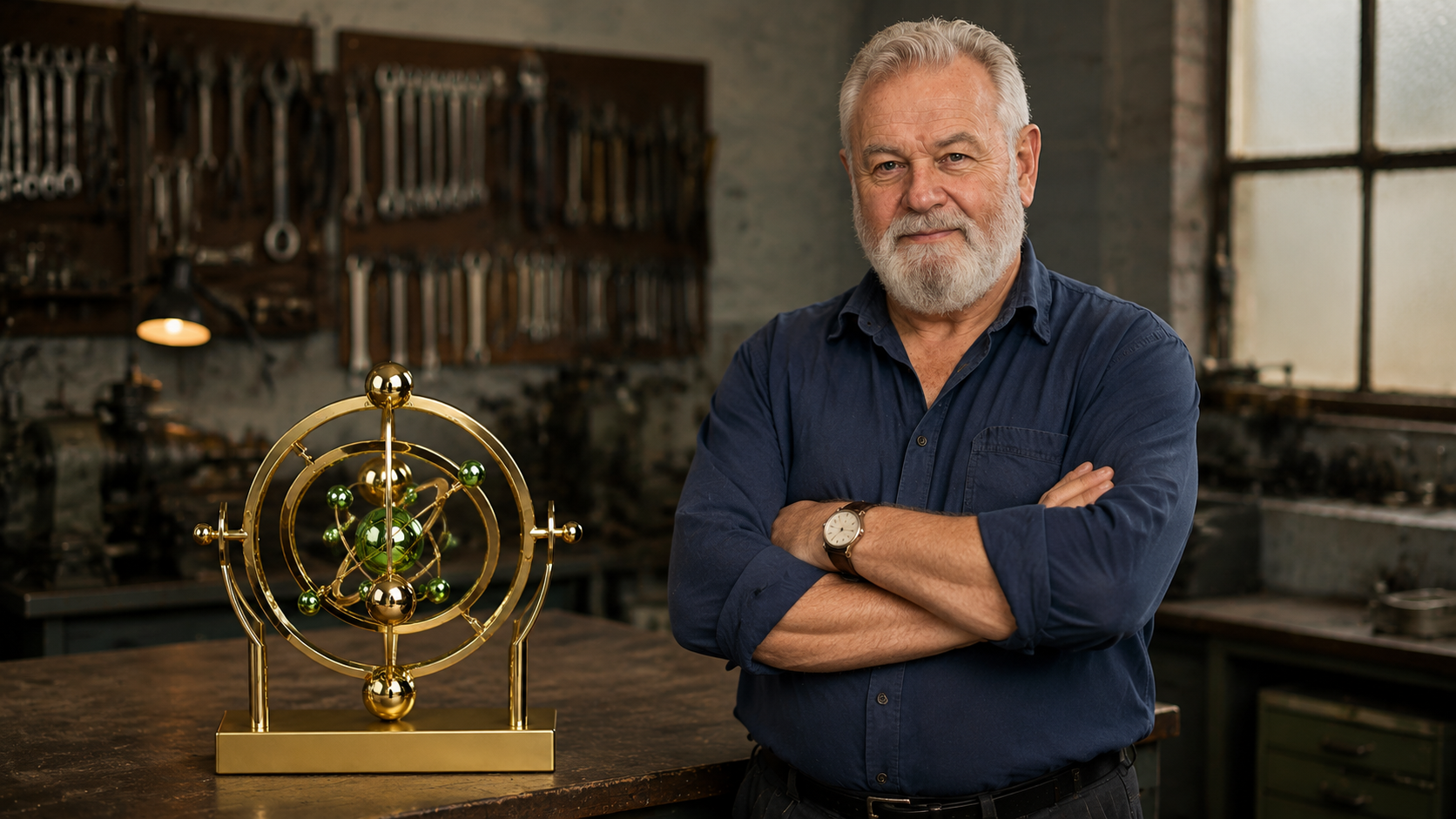
In a narrow workshop in Birmingham's Jewellery Quarter, the same square mile where craftsmen once turned brass for the world's finest scientific instruments, a 71-year-old machinist still works by hand. He does not own a single automated tool.
His name is Percival Greaves, and he belongs to the third generation of a family that has shaped precision brass since the Victorian era. His grandfather turned fittings for surveying theodolites. His father repaired marine chronometers. Percival builds something rarer: a kinetic sculpture whose rings and spheres orbit like a tiny solar system.
For 52 years he has refused to cut corners. Now, on the edge of retirement, he is releasing his last pieces directly to the people who understand them. What follows is the story of a craft the modern world very nearly forgot.




Where The World's Finest Instruments Were Born
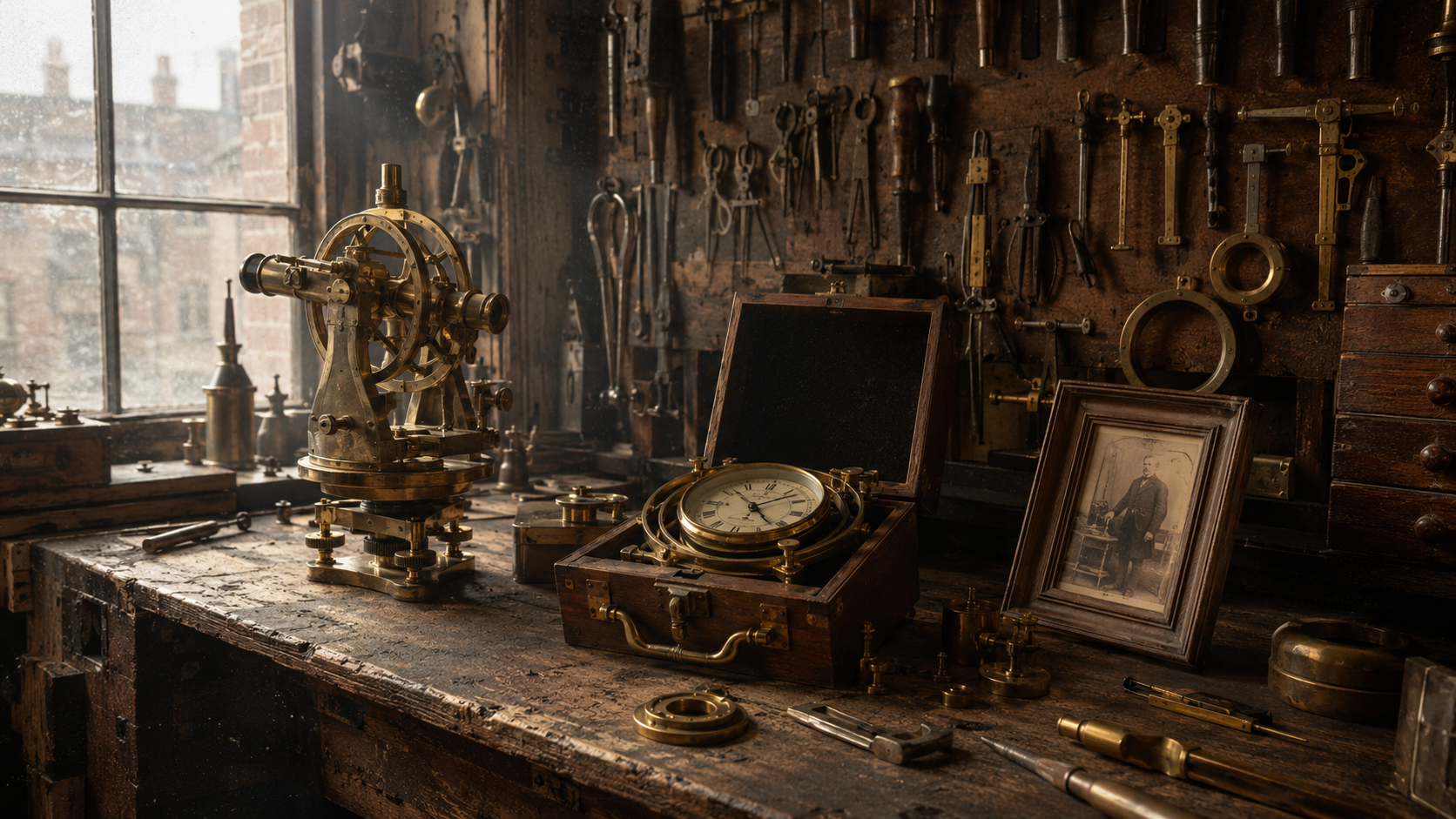
Birmingham's Jewellery Quarter has been a center of fine metalwork since the 1760s. By the 1800s, its workshops were turning the brass components inside the surveying instruments, microscopes, and ship's chronometers that mapped the British Empire. Precision was not a marketing word here. It was the trade.
Percival's grandfather opened his bench in 1911, turning fittings for theodolites used by railway surveyors. His father took over after the war, repairing the marine chronometers that kept merchant ships on course before satellite navigation existed. Both men measured their work in thousandths of an inch.
Percival trained at 19, in 1974, under his father. He learned to cut a thread by feel, to read a finish by the way light moved across it. Over 52 years, he has built fewer than 4,000 finished pieces. Each one carries the same standard his grandfather set more than a century ago. He signs none of them with a logo, only a stamped maker's mark.
Why A Machine Cannot Build This Piece
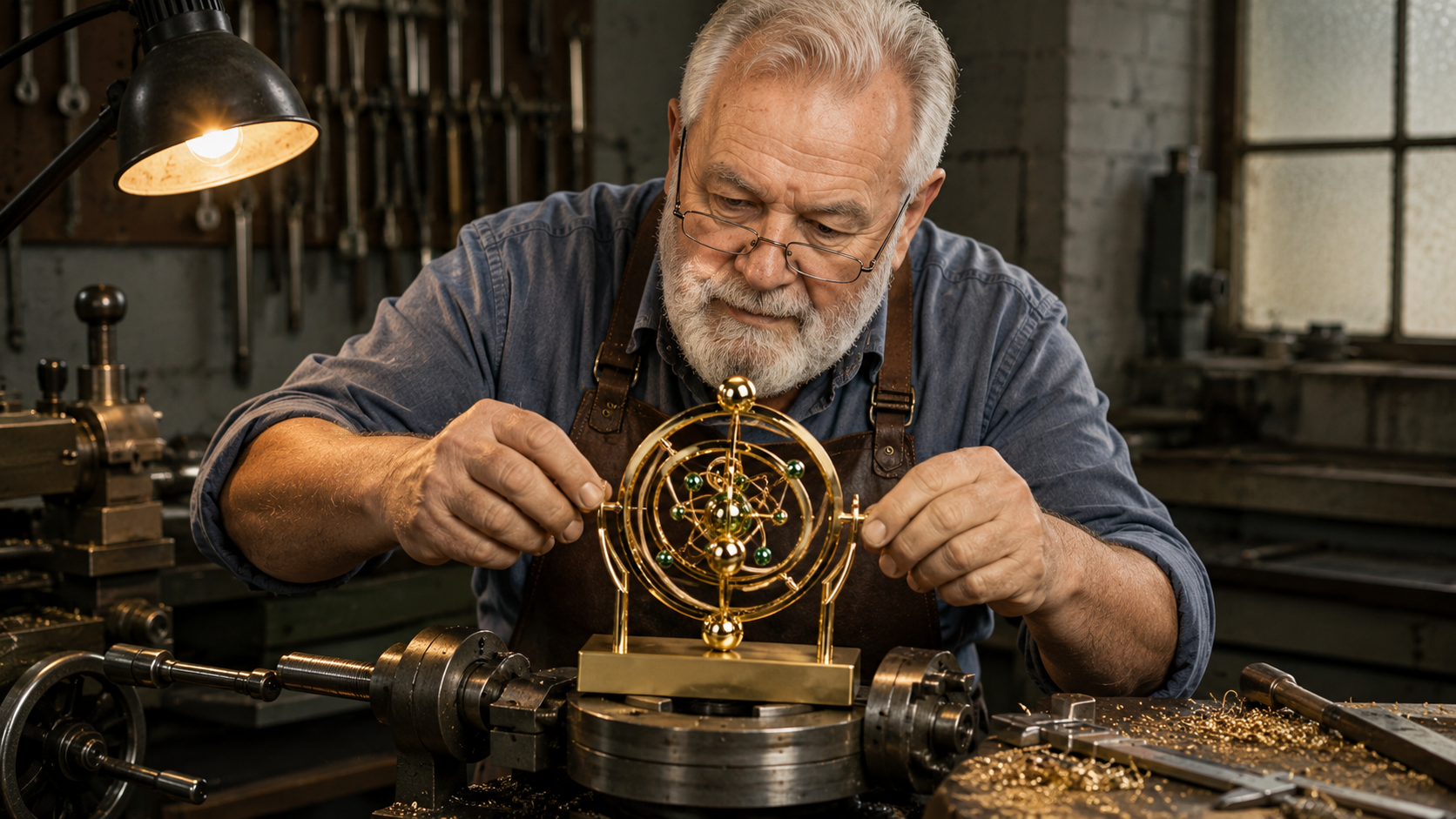
The mechanism looks simple from across a room. Concentric brass rings hold spheres that orbit a central axis, the way planets circle a sun or electrons circle a nucleus. Set it in motion with a fingertip and it turns for nearly a full minute before settling.
That motion is the hard part. Each ring must be balanced against the others to within a fraction of a millimeter, or the orbit wobbles and dies. Percival fits every ring by hand on a manual lathe, testing the spin, shaving brass, testing again. A single sculpture takes him close to 14 hours across several days.
A factory could stamp the rings in minutes. But stamped rings are never perfectly balanced, so the motion is short and lifeless. The long, hypnotic spin that makes the piece worth keeping on a desk comes only from hand-fitting. There is no shortcut anyone has found in 200 years of this trade.
Three Waves That Nearly Killed The Trade
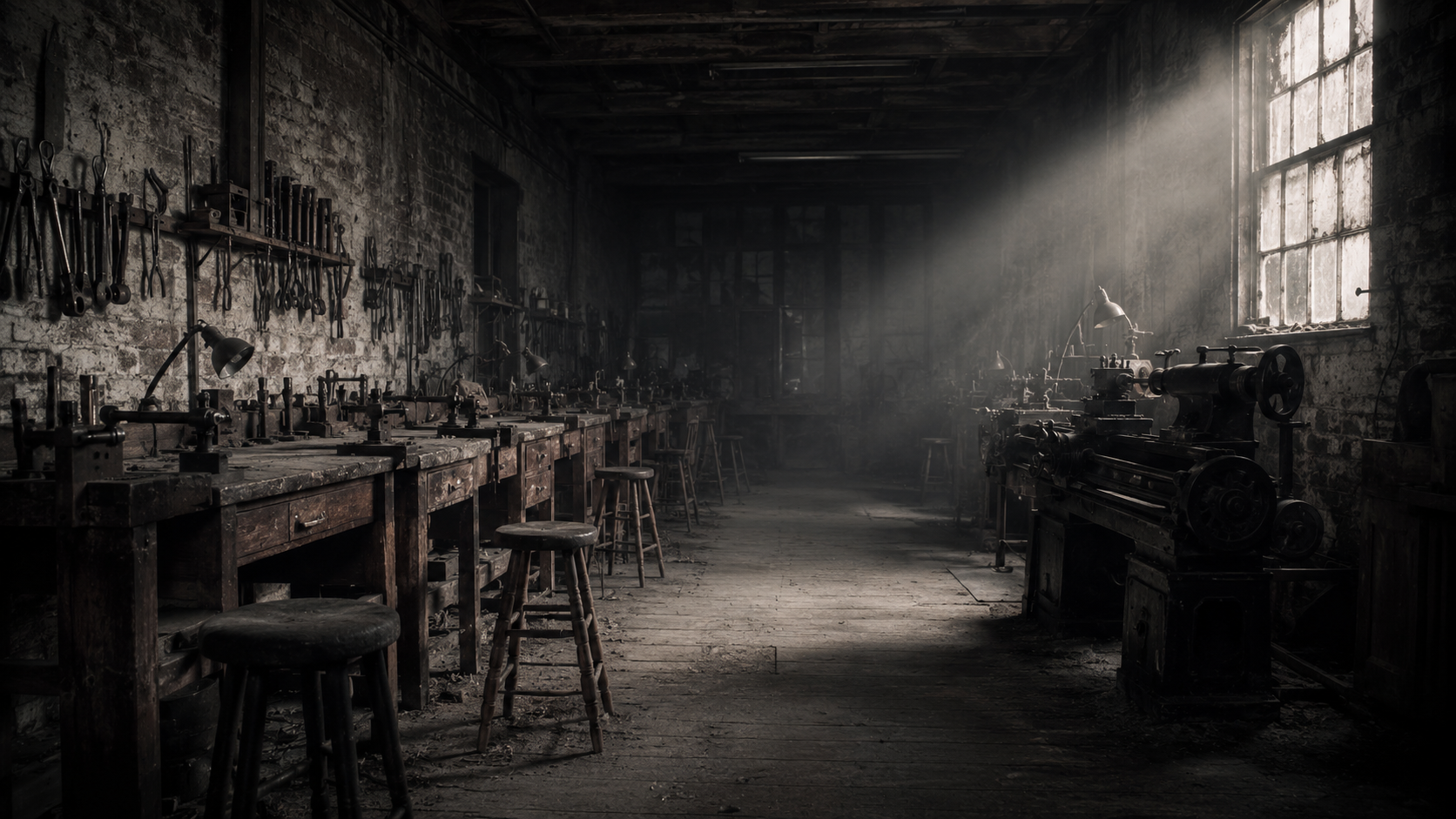
The craft did not die in one blow. It was worn down in three waves. The first came in the 1970s, when cheap quartz movements made mechanical precision feel obsolete almost overnight. Half the benches in the Quarter went quiet within a decade. Apprenticeships that once filled every spring simply stopped.
The second wave arrived in the 1990s, when production moved offshore. Brass desk objects that once took a trained hand a full day could be die-cast abroad in minutes, for a fraction of the labor. Importers did not care that the spin was dead. The customer abroad never saw the difference.
The third wave was the cruelest. In the 2010s, mass-produced decor began borrowing the language of heritage, stamping made by hand on pieces no hand ever touched. By 2026, Percival counts fewer than a dozen machinists in Britain still doing this work the old way. He is the last in his family.
What 14 Hours Of Hand-Work Produces
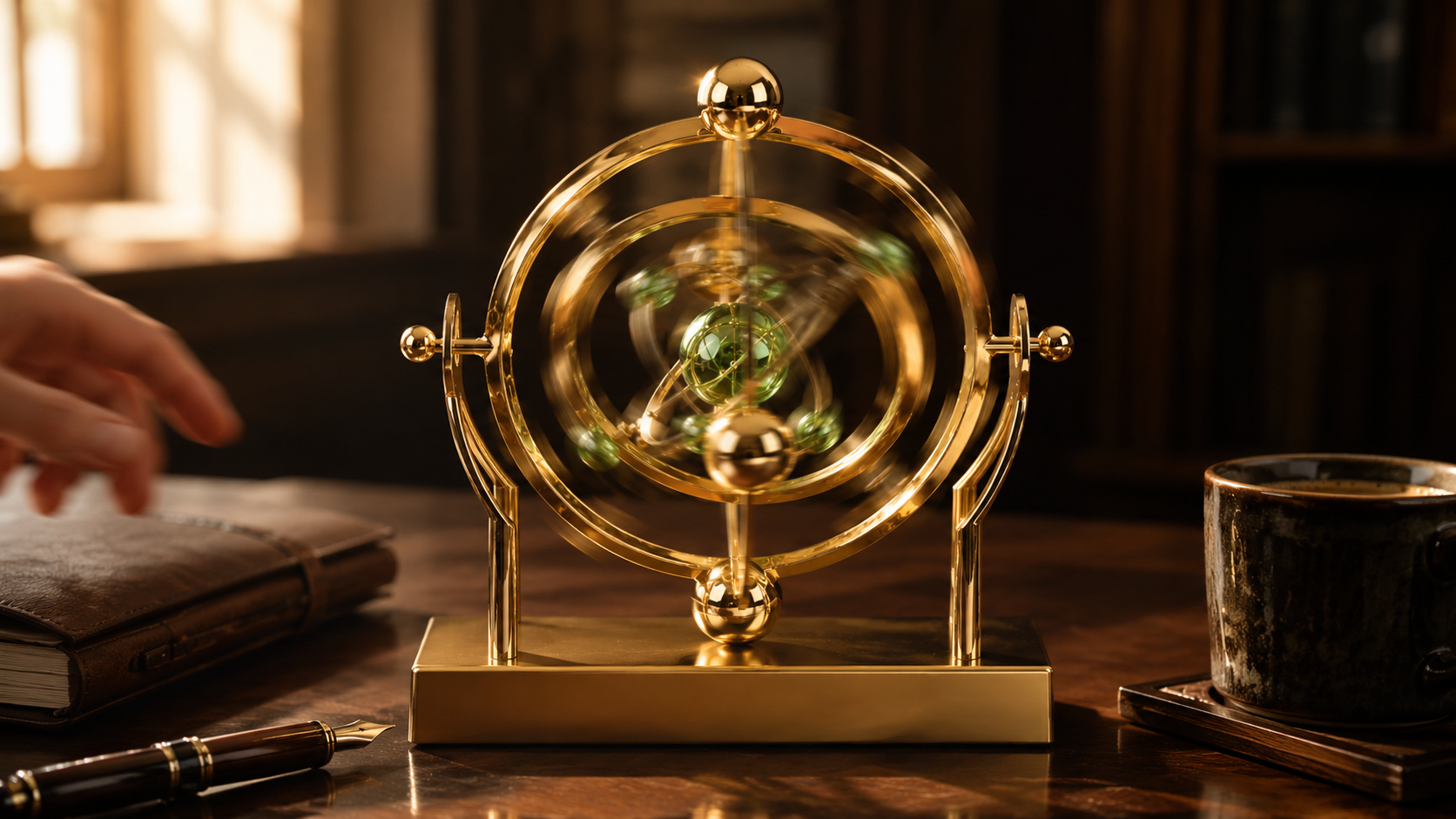
The piece is called the Orrex Orbital Sculpture. It stands on a solid brass base heavy enough to feel permanent in the hand, with concentric rings rising above it in high-polish brass. At rest, it reads as a quiet, serious object. In motion, it becomes something people cannot stop watching.
Owners describe it as a thinking object. You set the rings turning while you take a call, or read, or work through a problem, and the slow orbit pulls the eye without demanding it. It is the rare desk piece that is both still life and quiet motion. Nothing on the desk beside it looks quite the same afterward.
It also tells a story without a word. Every visitor asks what it is, and the answer carries 3 generations of Birmingham craft, 52 years at one man's bench, and a tradition older than the country it now ships to. That is not something a catalog can manufacture.
Who Keeps One On Their Desk

The people who buy these tend to already own good things and want fewer of them. Retired engineers. Surgeons. Men who spent 40 years building something and want one object on the desk that reflects that, not another gadget that will be landfill in 2 years. They are done accumulating; they want to keep.
A surprising number arrive as gifts. A grown daughter buying for a father who is impossible to shop for. A wife marking a 35th anniversary. The piece solves the hardest gift problem there is: something for the man who insists he needs nothing.
What they share is a quiet pride in owning the real thing. In a house full of mass-produced objects, here is one made entirely by a single pair of hands, signed, numbered, and built to outlast its owner. Most say it becomes the first thing guests notice when they walk into the room.
What Actually Arrives At Your Door
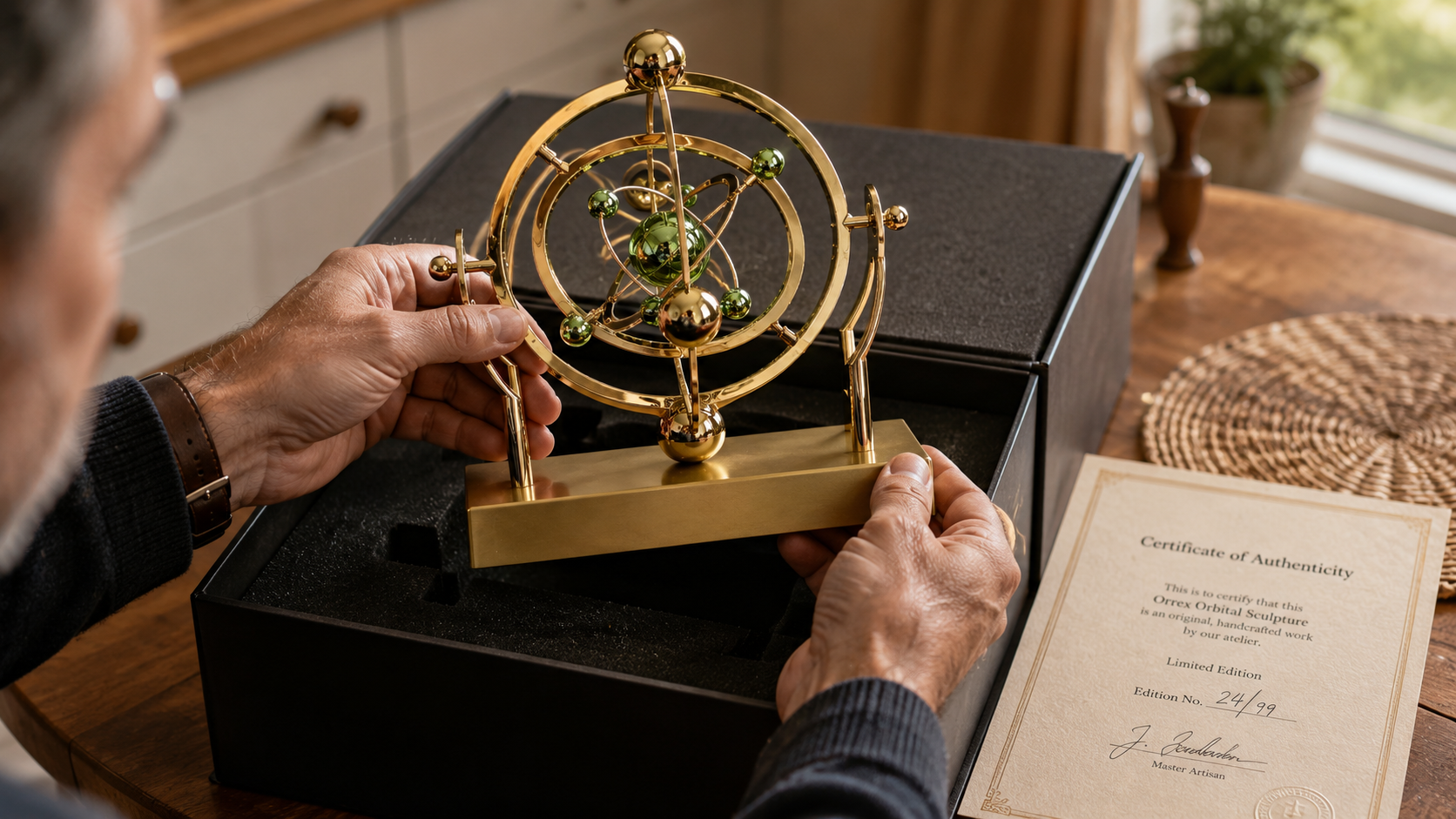
These are not claims. Each one is something you can check the moment you lift it out of the shipping box at home.
A solid brass base with high-polish brass rings, assembled and balanced entirely by hand. Substantial weight, the kind that does not slide when you set the rings spinning. It stands roughly the height of a hardcover book, sized for a desk or shelf, not a display hall. A stamped maker's mark and a hand-signed certificate of authenticity carrying the piece's number in the run. Packed in a fitted protective box built to survive shipping across the Atlantic.
It arrives backed by a 30-day return guarantee. Set it on your desk, spin it, live with it for a month. If it does not earn its place, send it back for a full refund, no questions. Percival would rather it come home than sit on a desk where it is not wanted.
What His Collectors Tell Us

I have a wall of awards that mean nothing to anyone but me. This sits on my desk and every single person who walks in stops to ask about it. It started more good conversations in a month than the awards did in 20 years.
My wife gave me this for my retirement after 38 years as an engineer. I understand exactly how hard the balancing is, and that is what gets me. You cannot fake that spin. Every morning I set it going before I sit down with my coffee.
I bought it for my father, who is 80 and impossible to buy for. He called me the night it arrived, which he never does. He said it reminded him of his own father's workshop. That phone call was worth more than I can say.
How To Get One Direct From The Workshop
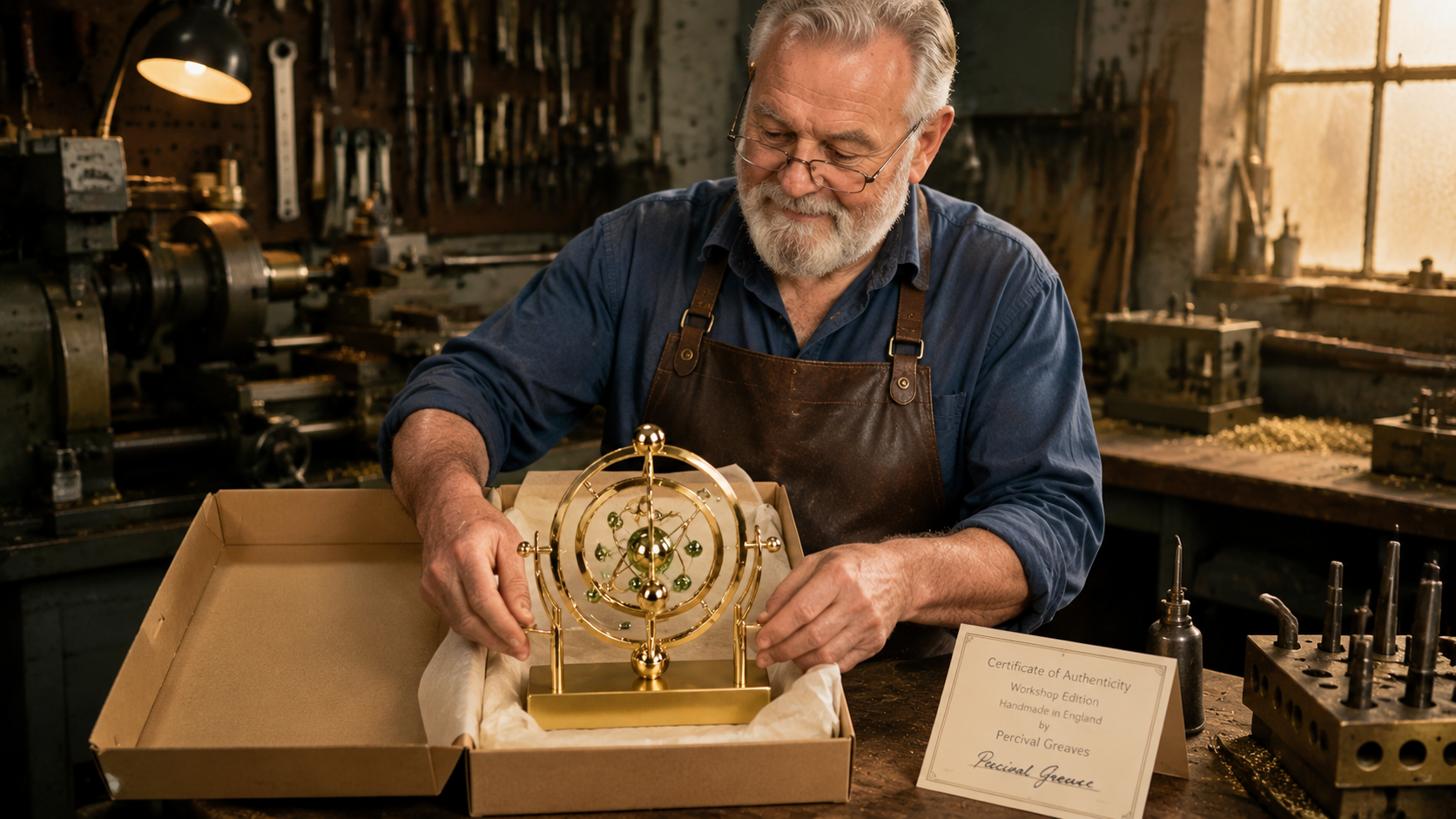
Percival is selling the final run directly from the Birmingham workshop, with no gallery and no middleman taking a cut. That decision is the whole offer. The same piece, sold through a decorative-arts dealer, would carry the standard gallery markup on top of the maker's price.
By shipping direct, that markup disappears. Buyers pay the workshop price, which works out to 70% OFF what the same sculpture would cost behind glass in a gallery. It is not a limited promotion. It is simply what the piece costs when no one stands between the maker and the desk it ends up on.
When the final run is gone, it is gone. Percival has been clear that he will not start another.
The Last Of A Birmingham Tradition
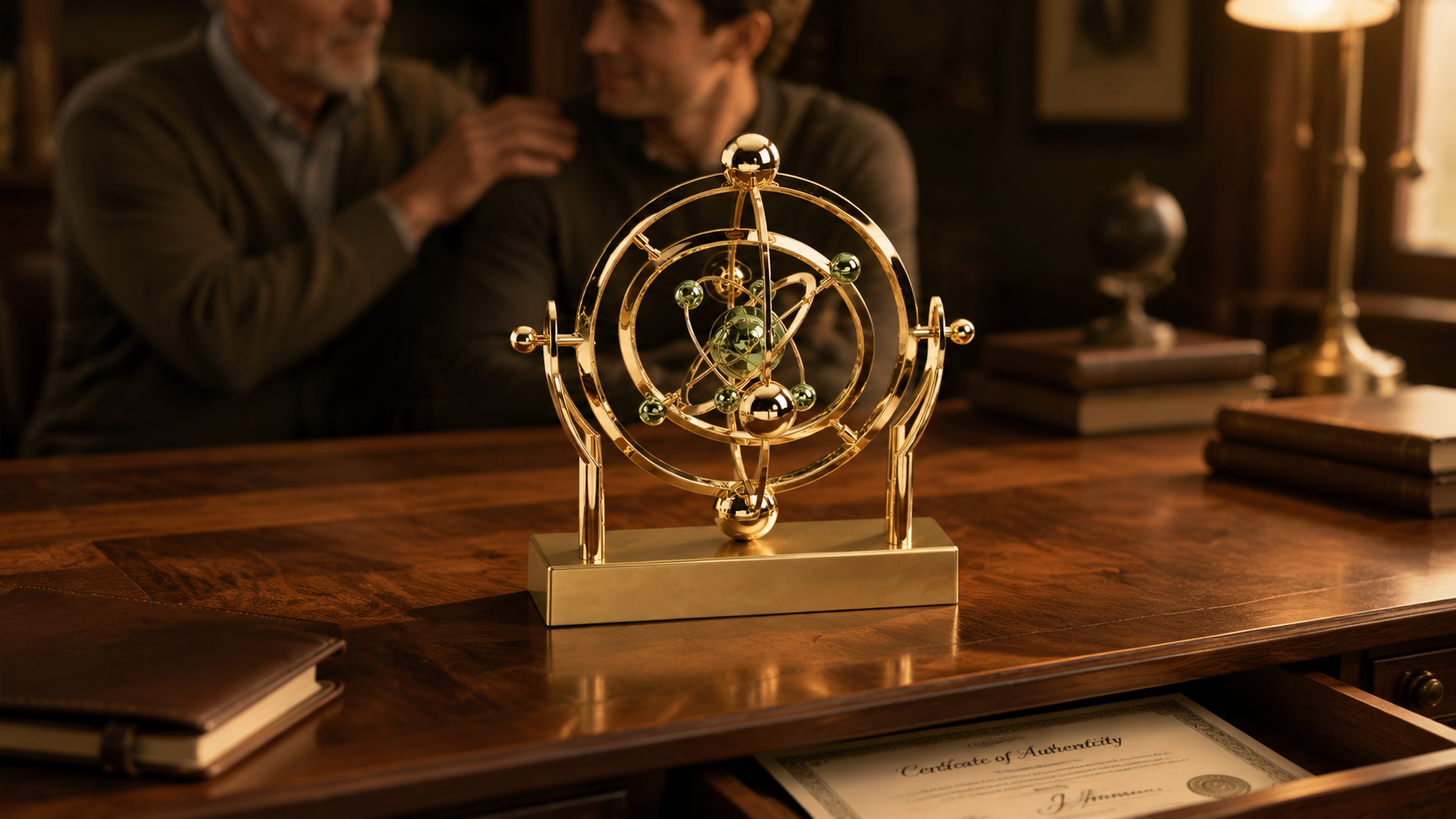
Some objects are bought and forgotten by the weekend. This is the other kind. It is the piece a man keeps for 30 years and then hands to his son, with the certificate still in the drawer and the spin still as true as the day it left the bench.
Percival Greaves will close his workshop within the year. What he leaves behind is a small number of sculptures, each one carrying 52 years of a craft that almost vanished. If one is meant for your desk, or for someone who would understand it, this is the window. When the bench goes quiet, there will be no more.
Percival Greaves, master machinist, the Orrex workshop, Birmingham
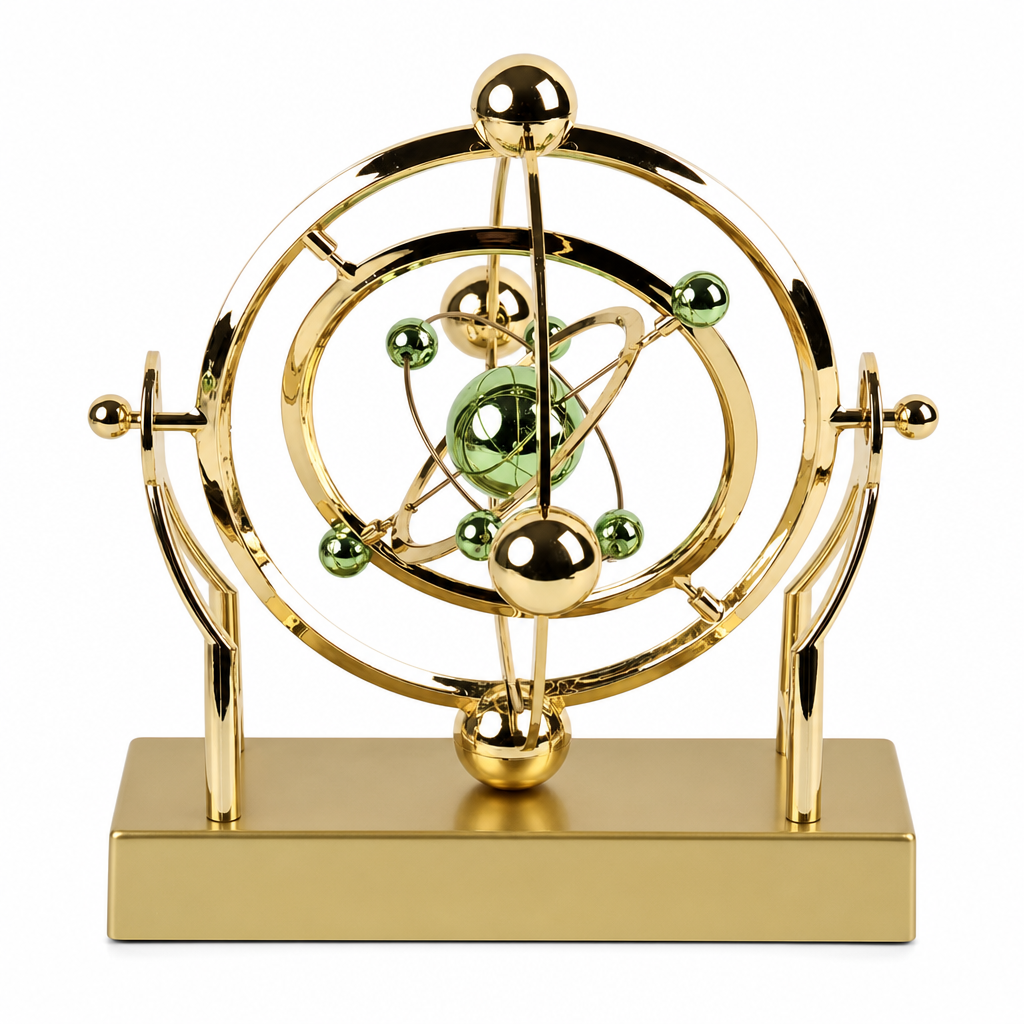
Hand-machined in Birmingham over 14 hours, balanced by hand for a spin no factory piece can match.
Check AvailabilityWhat Buyers Are Saying